
Owning a zero‑turn mower makes mowing fast and efficient, but spreading seed, fertilizer, lime, or ice melt over your lawn can still take time – unless you pair your mower with a quality spreader.
Best Spreader for Zero Turn Mower
1. Agri‑Fab 45‑0463 130 lb Tow‑Behind Lawn & Garden Broadcast Spreader
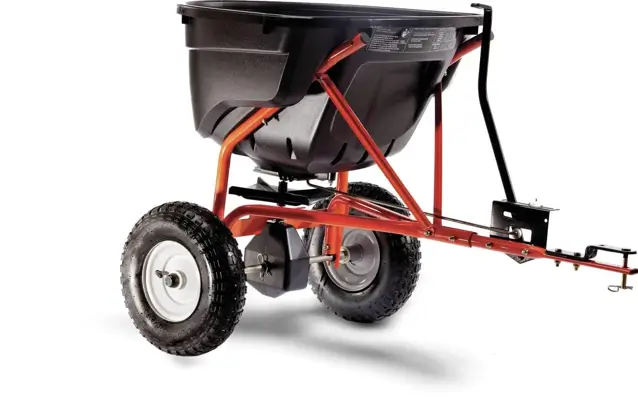
A dependable pull-behind spreader, this model offers a smooth distribution system and broad compatibility with many mower brands.
Key Features:
- 130 lb hopper – covers roughly half an acre per fill.
- Large pneumatic tires – handle rough terrain easily.
- Universal hitch – compatible with most zero‑turn mowers.
- Spread width of 10–12 feet – reduces the number of passes required.
- Rod-linked flow control – allows precise start and stop from the mower seat.
Best for: Homeowners seeking a reliable spreader for seed, fertilizer, and ice melt.
Related Scotts Spreader Settings Chart(For All Products & Types)
2. Chapin 8622B Tow‑Behind Spreader with Auto‑Stop Dual Impeller
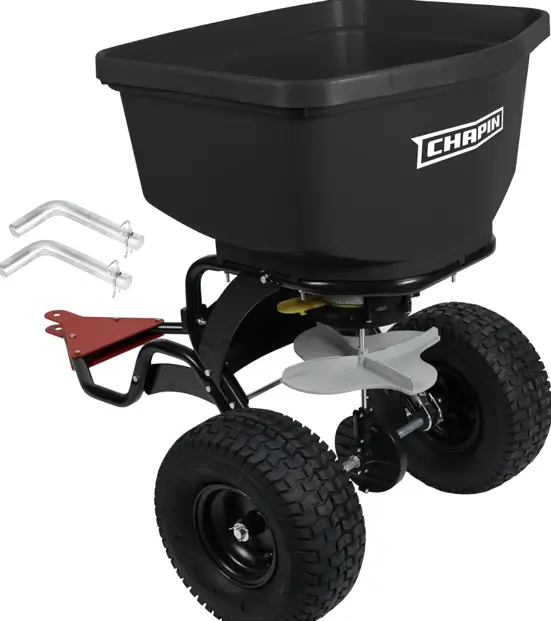
For users seeking precise control, this Chapin spreader features a dual impeller system that only spreads while moving, preventing over-application when stopping or slowing.
Key Features:
- 2.2 cubic-foot hopper – large enough for extensive lawn areas.
- Auto-Stop dual impeller – stops material flow automatically when the mower stops.
- 14-inch pneumatic tires – provide stability and easy maneuverability.
- 11 adjustable gate settings – allow fine-tuned spread rates.
- Rust-resistant hopper and steel frame – built for long-term use.
Best for: Large lawns and users who want precise, controlled application.
3. Agri‑Fab Zero Turn Mower Electric Spreader (125 lb Capacity)
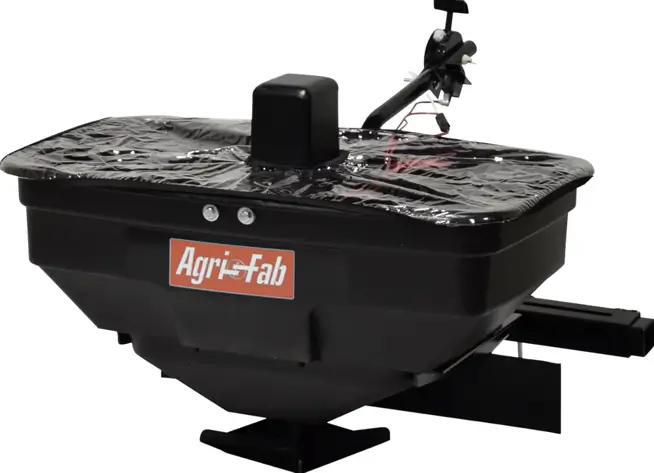
This electric spreader is designed specifically to attach to zero‑turn mowers, making it easy to spread seed, fertilizer, and other granular materials without leaving the seat.
Key Features:
- 125 lb rust-proof hopper – holds a large amount of material, reducing the need for frequent refills.
- 12V sealed electric motor – provides reliable, powered distribution without manual effort.
- Spread width up to 12 feet – covers large areas quickly.
- Cable-controlled flow – allows adjustment from the mower seat.
- Versatile use – suitable for grass seed, fertilizer, and other granular products.
Best for: Medium to large lawns where convenience and efficiency are important.
Related Lesco Spreader Settings Chart(For All Product Types)
4. John Deere 130 lb Tow‑Behind Lawn Spreader
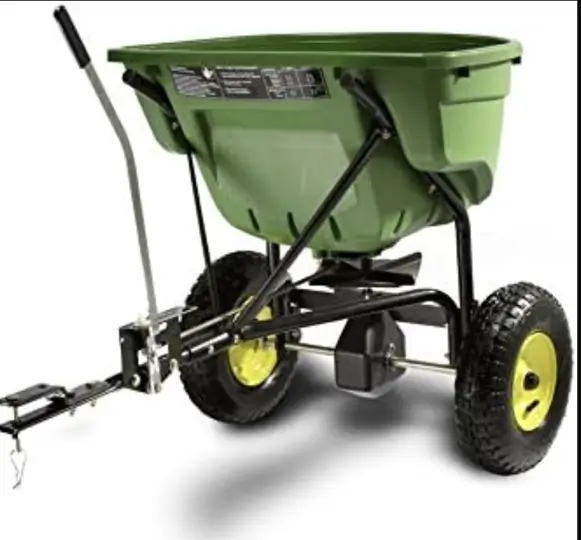
This John Deere spreader combines durability and simplicity. It handles heavy loads and provides consistent performance across seasons.
Key Features:
- 130 lb hopper – suitable for medium to large lawn areas.
- Universal hitch and control lever – easy to attach and operate with a zero-turn mower.
- Wide spread radius – ensures efficient coverage.
- Sturdy wheelbase – remains stable on uneven terrain.
Best for: Those who prefer a tried-and-true spreader with easy setup and reliable performance.
5. Brinly BS36BH 175 lb Tow‑Behind Broadcast Spreader
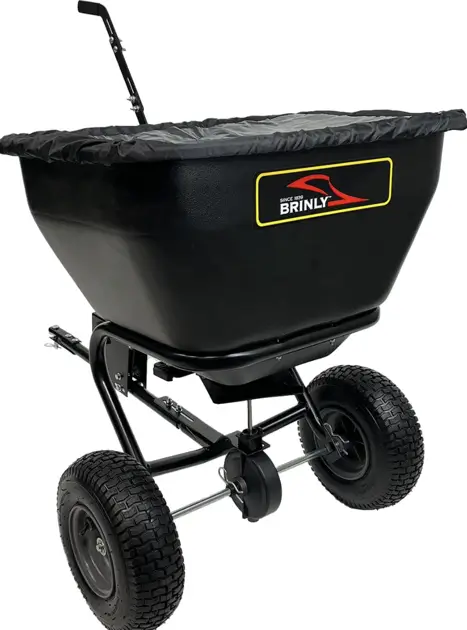
This heavy-duty broadcast spreader is ideal for large properties. Its large hopper and durable design make it suitable for repeated use and covering big areas efficiently.
Key Features:
- 175 lb hopper capacity – ideal for lawns around an acre or more.
- Universal hitch compatibility – works with most zero‑turn mowers.
- Adjustable spread pattern and width (up to 12 ft) – ensures even coverage.
- Autoflow directional control – stops product flow when the mower stops to prevent waste.
- Rust-proof polyethylene construction – provides long-lasting durability.
Best for: Large lawns, seed and fertilizer applications, and year-round use, including ice melt in winter.
Related John Deere Fertilizer Spreader Settings(For All Fertilizer Types)
What to Look For When Choosing a Spreader
Choosing the right spreader for your zero-turn mower depends on several key factors:
1. Hopper Capacity
A larger hopper reduces refills and saves time, especially for lawns larger than a quarter acre. Spreaders with 100+ lb capacity are ideal for medium to large yards.
2. Spread Width
A spread width of at least 10–12 feet allows you to cover your lawn efficiently and prevents streaks or missed areas.
3. Control Mechanism
Electronic controls enable starting and stopping the spreader from the mower seat, which is more convenient than manual levers for zero-turn mowers.
4. Wheel Type
Large pneumatic tires make towing smoother and help maintain stability on slopes or uneven terrain.
5. Durability
Rust-proof hoppers and steel frames ensure your spreader will last for years, especially if spreading corrosive materials like fertilizer, lime, or salt.
Related Vigoro Spreader Settings vs Scotts(For All Product Types)
FAQs
What is the best spreader to buy?
The “best” spreader depends on your lawn size and how you plan to use it. For most homeowners with medium to large lawns, a tow‑behind broadcast spreader with a 100–175 lb hopper offers the best balance of capacity, ease of use, and durability.
If you want the convenience of controlling the application without leaving the mower seat, an electric spreader designed for zero‑turn mowers is an excellent choice. The important thing is choosing a model that fits your needs, whether that’s heavy seed application, fertilizer distribution, or year‑round use like ice melt.
How to choose a spreader?
To choose the right spreader:
- Assess your lawn size: Larger lawns benefit from a bigger hopper and wider spread width to reduce refills and passes.
- Consider how you’ll use it: For frequent fertilizing or seeding, choose a durable model with adjustable flow control. For occasional use, a basic tow‑behind model may be enough.
- Look at control options: Electric or cable controls mounted on your mower make operation easier than manual levers.
- Check construction quality: Rust‑proof hoppers and sturdy frames increase longevity, especially if spreading corrosive materials like fertilizer or salt.
- Match compatibility: Ensure the spreader can be easily hitched to your zero‑turn mower.
Which is better, a drop or a rotary spreader?
Both types have strengths:
- Drop spreaders apply material directly below the unit with precise control and very little overspray, which makes them ideal for narrow areas and edging. However, they cover less ground per pass and take longer on large lawns.
- Rotary (broadcast) spreaders fling material over a wide swath and are much faster for open lawns. They may scatter some material outside the intended area, so they’re best for wide, unobstructed yards.
For most zero‑turn mower applications, rotary spreaders are preferred because they cover more area with fewer passes.
How to choose a lawn spreader?
Choosing a lawn spreader involves:
- Lawn size: Bigger lawns need a spreader with a larger capacity and wider spread width.
- Material type: Some models handle seed, granular fertilizer, and ice melt better than others.
- Ease of use: Features like electric control from the seat, easy‑to‑read settings, and smooth wheels improve your experience.
- Durability: Longevity comes from rust‑resistant materials and sturdy construction.
Think through how often you’ll use the spreader and what materials you’ll apply — then match those needs to the spreader features.
What size spreader do I need?
General guidelines:
- Small lawns (up to ¼ acre): A spreader with a 50–100 lb hopper is usually sufficient.
- Medium‑sized lawns (¼–½ acre): A 100–125 lb capacity spreader works well.
- Large lawns (½ acre and above): Look for a spreader with at least 130–175 lb capacity and a wide spread width (10 ft or more) to minimize refills and mowing passes.
Are battery‑powered spreaders worth it?
Battery‑powered or electric spreaders can be worth it depending on your priorities:
Pros:
- You can start and stop the spread from the mower seat, which saves time and effort.
- They provide consistent distribution rates without manual cranking.
- They’re convenient for larger lawns or frequent use.
Cons:
- They’re usually more expensive than basic tow‑behind models.
- Battery life can limit use if you have a very large property and don’t have spare batteries.
If convenience, precision, and ease of operation matter most to you, battery‑powered spreaders are often worth the investment.
Final Thoughts
Pairing your zero-turn mower with a quality spreader makes lawn care faster, easier, and more efficient. Electric models like the Agri-Fab Zero Turn Electric Spreader are ideal for convenience, while heavy-duty tow-behind models like the Brinly BS36BH or Chapin 8622B provide extra capacity and precise control for larger lawns.
Focus on hopper capacity, ease of use, spread width, and durability when making your choice. With the right spreader, you can transform your lawn maintenance routine and enjoy a healthier, greener yard with less effort.