
A lush green lawn can quickly lose its beauty when insects invade. Grubs, chinch bugs, armyworms, sod webworms, ants, fleas, ticks, and mole crickets can all damage turf by feeding on grass blades or roots. If left untreated, these pests can create brown patches, thinning grass, and even dead areas across your lawn.
Best Insecticide for Lawns
1. Ortho BugClear Lawn Insect Killer1 Granules
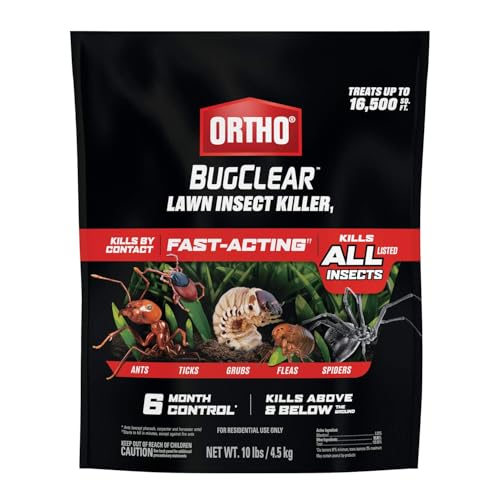
- LONG-LASTING PROTECTION: This lawn insect and ant killer provides up to 6 months of ant control (excludes pharaoh, carpe…
- FAST-ACTING BUG BARRIER: This pest control product starts to work in minutes (except against fire ants) to protect your …
- WHEN TO USE: Apply lawn insect killer granules with a Scotts Spreader or other compatible spreader when you first notice…
Ortho BugClear is one of the most popular lawn insecticides because it provides broad-spectrum protection against common turf pests. It targets ants, fleas, ticks, spiders, armyworms, grubs, chinch bugs, and many other insects.
The granular formula is easy to spread with a broadcast or drop spreader, making it ideal for medium and large lawns.
Key Features
- Controls over 100 lawn insects
- Kills ants, ticks, fleas, spiders, grubs, and armyworms
- Granular formula for simple application
- Long-lasting residual protection
- Covers large lawn areas
- Works well for preventative and curative treatments
Best For
Homeowners looking for an all-around lawn insecticide.
Related Homemade Fertilizer for Plants(12 Best Easy DIY Recipes)
2. Scotts Turf Builder SummerGuard Lawn Food with Insect Control

- Feeds and strengthens your lawn against heat and drought
- Kills and protects against listed bugs
- Won’t burn lawn—guaranteed
If your lawn needs both fertilizer and insect control, Scotts SummerGuard is an excellent choice. It feeds your grass while protecting it from common insects during the growing season.
This dual-purpose product saves time by combining lawn fertilization and insect protection into one application.
Key Features
- Lawn fertilizer and insecticide in one
- Strengthens grass while killing insects
- Controls ants, fleas, ticks, and other lawn pests
- Easy granular application
- Promotes greener, thicker turf
- Suitable for many common grass types
Best For
Lawns needing seasonal feeding and insect protection.
Related Best Nutsedge Killer(Top 6 Best Picks 2026)
3. Spectracide Triazicide Insect Killer for Lawns & Landscapes

- OUTDOOR USE: Protects lawns, vegetables, fruit and nut trees, roses, flowers, trees and shrubs.
- KILLS 260+ INSECTS BY CONTACT: Kills above and below ground – kills grubs, ants as listed, fleas, deer ticks, Japanese b…
- NON-STAINING: Non-staining to most home siding depending on age and cleanliness – see product label for details.
Spectracide Triazicide has been a trusted lawn insect killer for years. It works against hundreds of insect species and is available in both granular and ready-to-spray liquid forms.
Its fast-acting formula begins killing insects quickly after application.
Key Features
- Controls over 260 insect species
- Available in granular and liquid versions
- Fast knockdown action
- Treats lawns, ornamentals, and landscapes
- Easy hose-end application (liquid version)
- Excellent value for large properties
Best For
Large lawns with multiple insect problems.
4. BioAdvanced Complete Insect Killer for Soil & Turf

- COMPLETE PEST CONTROL: Complete Brand Insect Killer for Soil and Turf controls both listed surface and soil insects with…
- KILLS LISTED INSECTS: Fast-acting insecticide formula kills listed insects including grubs, ants (except Pharaoh ants), …
- 3 MONTH PROTECTION: Pest control formula kills listed soil insects and provides subsurface protection for up to 3 months
BioAdvanced Complete Insect Killer provides season-long protection against many destructive lawn insects. It targets surface insects as well as soil-dwelling pests like grubs.
The product penetrates the soil to reach insects hiding beneath the turf.
Key Features
- Controls surface and underground insects
- Effective against grubs and mole crickets
- Long residual activity
- Granular formulation
- Easy spreader application
- Suitable for residential lawns
Best For
Lawns suffering from grub damage.
Related Best Lawn Grub Killer(Top 5 Picks 2026)
5. Sevin Insect Killer Lawn Granules

- Large-Scale Pest Protection. Large-Scale Results
- Kills Over 30 Listed Pests
- Use on Lawns, Ornamentals and Around Homes
Sevin has earned a reputation for reliable insect control across gardens and lawns. Its lawn granules provide broad-spectrum protection against many damaging insects without requiring complicated mixing.
The product is suitable for routine lawn maintenance throughout the growing season.
Key Features
- Broad-spectrum insect control
- Kills ants, fleas, ticks, crickets, and grubs
- Ready-to-use granules
- Easy to spread evenly
- Fast-acting formula
- Covers large areas
Best For
General-purpose lawn insect control.
Related Best Lawn Leveling Rakes and Tools(6 Best Picks 2026)
Common Lawn Insects
Before choosing an insecticide, identify the pest causing the damage.
White Grubs
Grubs feed on grass roots, causing brown patches that easily pull away from the soil.
Chinch Bugs
These tiny insects suck moisture from grass blades, leaving dry yellow or brown areas.
Armyworms
Armyworms feed rapidly on grass leaves and can destroy a healthy lawn within days.
Sod Webworms
These caterpillars chew grass blades, creating irregular patches of dead grass.
Mole Crickets
Mole crickets tunnel beneath the soil, damaging roots and loosening the turf.
Fire Ants
Fire ants create mounds throughout the lawn and deliver painful stings.
Fleas and Ticks
Besides affecting pets, these pests can make spending time outdoors unpleasant.
Related Scotts Weed and Feed(Complete Guide for Healthier, Greener Lawn)
Granular vs Liquid Lawn Insecticides
Granular Insecticides
Advantages:
- Easy to apply
- Long-lasting protection
- Excellent for large lawns
- Ideal for preventative treatments
Disadvantages:
- Require watering after application
- Slower initial results
Liquid Insecticides
Advantages:
- Fast knockdown
- Excellent coverage
- Great for spot treatments
- Convenient hose-end sprayers available
Disadvantages:
- Usually require more frequent applications
- Less residual protection than granules
How to Apply Lawn Insecticide
For best results:
- Identify the pest.
- Mow the lawn before treatment.
- Apply during calm weather.
- Water granular products as directed.
- Keep pets and children off treated areas until the label indicates it is safe.
- Avoid applying before heavy rain.
- Follow all label instructions.
Signs Your Lawn Needs Insect Treatment
Watch for these warning signs:
- Brown patches
- Grass pulling up easily
- Bird activity digging in the lawn
- Visible insects
- Dead grass despite watering
- Thin or uneven turf
- Small tunnels or ant mounds
How Often Should You Treat?
Most homeowners only need one to three applications per year depending on insect pressure.
- Spring: Prevent grubs and early insects.
- Summer: Treat active infestations.
- Late summer: Control new grub populations if needed.
- Fall: Spot-treat persistent problems.
Avoid unnecessary insecticide applications, as beneficial insects also play an important role in lawn health. Integrated pest management, monitoring pests and treating only when necessary, is generally recommended.
Tips for Preventing Lawn Insects
Good lawn care reduces insect problems naturally.
- Mow at the proper height.
- Water deeply but infrequently.
- Fertilize appropriately.
- Remove excess thatch.
- Improve soil drainage.
- Overseed thin areas.
- Monitor for insects regularly.
Healthy, vigorous grass is much better able to tolerate occasional insect feeding.
FAQs
What is the best insecticide for lawns?
Ortho BugClear Lawn Insect Killer1 is one of the best all-around options because it controls a wide variety of lawn pests and offers long-lasting protection.
Should I use granules or liquid?
Granules work well for preventative, season-long protection, while liquid insecticides provide faster control during active infestations.
When is the best time to apply lawn insecticide?
Early morning or late evening is ideal. Avoid applying during windy conditions or before heavy rainfall.
Can insecticides harm beneficial insects?
Yes. Broad-spectrum insecticides can affect pollinators and beneficial insects, so apply only when needed and follow the label carefully.
How long does lawn insecticide last?
Most products provide protection for several weeks, while some granular formulations continue working for several months depending on weather and the target pests.
Final Thoughts
Choosing the best insecticide for lawns depends on the pests you’re trying to control, the size of your yard, and whether you prefer granular or liquid treatments. Products like Ortho BugClear, Scotts SummerGuard, Spectracide Triazicide, BioAdvanced Complete Insect Killer, and Sevin Lawn Granules consistently rank among the top choices for homeowners because they offer reliable control of common lawn pests.
For the best results, correctly identify the insects affecting your lawn, apply the product according to the manufacturer’s directions, and maintain healthy turf through proper mowing, watering, and fertilization. With the right approach, you can enjoy a greener, healthier, and virtually insect-free lawn all season long.