
Garden hoses may look simple, but the fittings attached to them are designed to follow standard sizing systems. Whether you are replacing a hose, connecting a sprinkler, installing a pressure washer, or attaching a nozzle, knowing the standard garden hose fitting size helps you avoid leaks and compatibility problems.
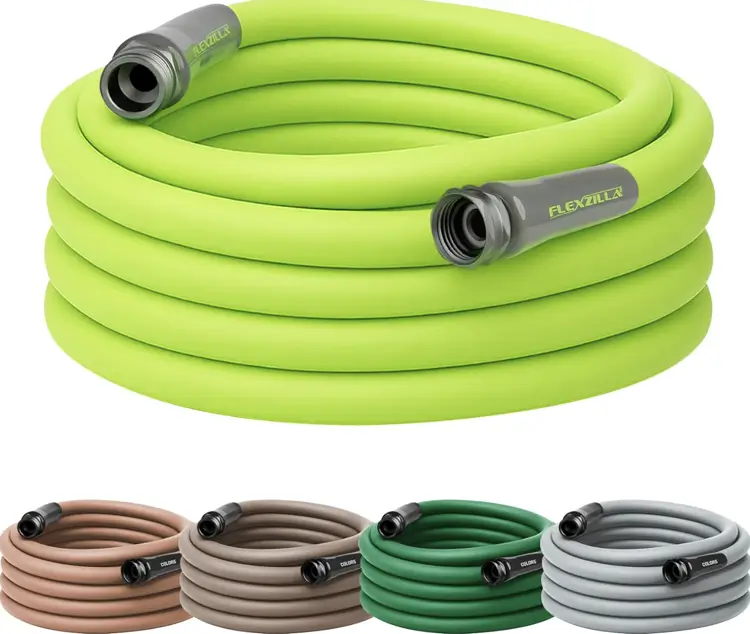
What Size Are Standard Garden Hose Fittings
Standard garden hose fittings in the United States typically use a 3/4-inch Garden Hose Thread (GHT) size with 11.5 threads per inch, making them compatible with most residential hoses, outdoor faucets, sprinklers, and watering accessories.
This standard applies to:
- Garden hoses
- Outdoor faucets
- Hose nozzles
- Sprinklers
- Hose timers
- Splitters
- Pressure washer adapters
Most standard garden hoses sold in the U.S. use this fitting size.
Related What Thread Is a Garden Hose(Explained in Details)
Understanding Garden Hose Thread (GHT)
Garden hoses use a special thread system called Garden Hose Thread (GHT). It is different from plumbing pipe threads such as NPT (National Pipe Thread).
Key characteristics of GHT:
- Straight thread design
- Not tapered like pipe threads
- Requires a rubber washer for sealing
- Designed specifically for water hose connections
Because GHT and NPT are different, they usually do not connect properly without an adapter.
Related Why Is My Garden Hose Sticky(6 Causes + Solutions)
Common Garden Hose Fitting Sizes
Although 3/4-inch is the standard, there are several garden hose fitting sizes available.
1. 3/4-Inch GHT
This is the most common size for residential use.
Typical applications:
- Home garden hoses
- Lawn sprinklers
- Hose-end sprayers
- Outdoor faucets
Most homeowners will use this size exclusively.
2. 5/8-Inch Hose Diameter
Many people confuse hose diameter with fitting size.
A 5/8-inch hose:
- Refers to the inside diameter of the hose
- Usually still uses a 3/4-inch GHT fitting
This is the most popular hose diameter for everyday watering.
3. 1/2-Inch Garden Hose
Smaller garden hoses may have:
- 1/2-inch inside hose diameter
- Standard 3/4-inch hose fittings
These are commonly used for light-duty watering.
4. 3/4-Inch Hose Diameter
Heavy-duty hoses often have:
- 3/4-inch inside diameter
- Standard 3/4-inch fittings
These provide higher water flow for:
- Irrigation
- Commercial landscaping
- Large lawns
5. 1-Inch Industrial Hose Fittings
Commercial or agricultural hoses sometimes use:
- 1-inch fittings
- Specialized connectors
These are less common in residential applications.
Related How Many GPM from a Garden Hose(+ 5 Factors Affecting It)
Male vs Female Garden Hose Fittings
Garden hose fittings come in two connection types.
Male Garden Hose Fitting
A male fitting:
- Has threads on the outside
- Screws into a female fitting
Common examples:
- Outdoor faucet
- Hose-end attachment
Female Garden Hose Fitting
A female fitting:
- Has threads inside
- Receives the male connector
- Usually contains a rubber washer
Most garden hoses have:
- Female fitting on one end
- Male fitting on the other
This allows multiple hoses to connect together.
Related Hunter PGP Nozzle Chart(For All Nozzle Types/Sizes)
Measuring Garden Hose Fittings
If you are unsure about your hose size, you can measure it yourself.
Step 1: Measure the Hose Diameter
Use a tape measure or caliper to measure:
- The inside diameter of the hose
Common sizes:
- 1/2 inch
- 5/8 inch
- 3/4 inch
Step 2: Measure the Fitting Diameter
Measure the outer diameter of the threaded fitting.
Standard 3/4-inch GHT fittings usually measure about:
- 1.06 inches outer diameter
Step 3: Count Thread Pitch
Standard garden hose fittings use:
- 11.5 threads per inch
Most homeowners do not need to measure thread pitch because nearly all residential hoses use the same standard.
Related How to Repair Expandable Garden Hose(In 5 Quick Steps)
Are All Garden Hose Fittings Universal?
Most residential garden hose fittings in North America are compatible because they follow the same GHT standard.
However, compatibility issues can occur with:
- International hoses
- Pressure washer fittings
- Pipe thread fittings
- Industrial hoses
Always check:
- Thread type
- Diameter
- Connection style
Standard Garden Hose Sizes Explained
Here are the most common garden hose sizes and their typical uses.
1/2-Inch Garden Hose
Best for:
- Small patios
- Light watering
- Container gardens
Pros:
- Lightweight
- Easy to handle
Cons:
- Lower water flow
5/8-Inch Garden Hose
Best for:
- General household use
- Lawn watering
- Washing cars
Pros:
- Good water pressure
- Balanced weight and flow
This is the most popular garden hose size.
3/4-Inch Garden Hose
Best for:
- Large lawns
- Heavy-duty watering
- Irrigation systems
Pros:
- Higher water flow
- Better for long hose runs
Cons:
- Heavier and more expensive
Garden Hose Adapter Types
Adapters help connect different fittings and accessories.
Common Adapter Types
GHT to NPT Adapter
Used for connecting garden hoses to plumbing pipes.
Quick Connect Adapter
Allows fast attachment and removal of accessories.
Hose Splitter
Connects multiple hoses to one faucet.
Swivel Connector
Prevents hose twisting and kinking.
Adapters are useful when working with:
- Pressure washers
- Irrigation systems
- RV water systems
- Outdoor sinks
Why Garden Hose Fittings Leak
Leaks are usually caused by:
- Worn rubber washers
- Damaged threads
- Loose fittings
- Cross-threading
- Cracked connectors
How to Prevent Leaks
- Replace rubber washers regularly
- Tighten fittings by hand
- Avoid overtightening
- Store hoses properly
- Use brass fittings for durability
Brass vs Plastic Hose Fittings
Garden hose fittings are commonly made from brass or plastic.
Brass Fittings
Advantages:
- Durable
- Corrosion-resistant
- Long-lasting
- Better sealing
Disadvantages:
- More expensive
Plastic Fittings
Advantages:
- Lightweight
- Affordable
Disadvantages:
- Can crack or wear out faster
For heavy-duty use, brass fittings are usually the better option.
Standard Garden Hose Thread in Other Countries
Garden hose standards vary worldwide.
United States and Canada
- 3/4-inch GHT
- 11.5 TPI
United Kingdom
- BSP (British Standard Pipe)
Europe
- Metric thread systems may be used.
International hoses may require adapters for compatibility.
Choosing the Right Garden Hose Fitting
When selecting hose fittings, consider:
- Hose diameter
- Water pressure
- Material quality
- Intended use
- Thread compatibility
For most homeowners:
- A 5/8-inch hose with 3/4-inch GHT fittings is ideal.
FAQs
Are all garden hose fittings 3/4 inch?
Most residential garden hose fittings in the U.S. are 3/4-inch GHT, but industrial and commercial hoses may use different sizes.
What does GHT mean on a garden hose?
GHT stands for Garden Hose Thread, the standard thread system used for garden hose connections.
Can I connect a garden hose to pipe threads?
Not directly. Garden hose threads and pipe threads are different, so you usually need an adapter.
What is the most common garden hose size?
The most common garden hose size is a 5/8-inch hose with standard 3/4-inch fittings.
How do I know what size my garden hose fitting is?
Measure the hose diameter and fitting diameter using a tape measure or caliper. Most standard fittings are 3/4-inch GHT.
Final Thoughts
Standard garden hose fittings in the U.S. typically use a 3/4-inch Garden Hose Thread (GHT) connection with 11.5 threads per inch. This standard is widely used for residential hoses, faucets, sprinklers, and watering accessories.
Although hose diameters may vary between 1/2 inch, 5/8 inch, and 3/4 inch, the fittings themselves are usually standardized for compatibility. Understanding these sizes makes it easier to replace hoses, connect accessories, and prevent leaks.
Before buying new fittings or adapters, always confirm the thread type and hose diameter to ensure a secure connection.